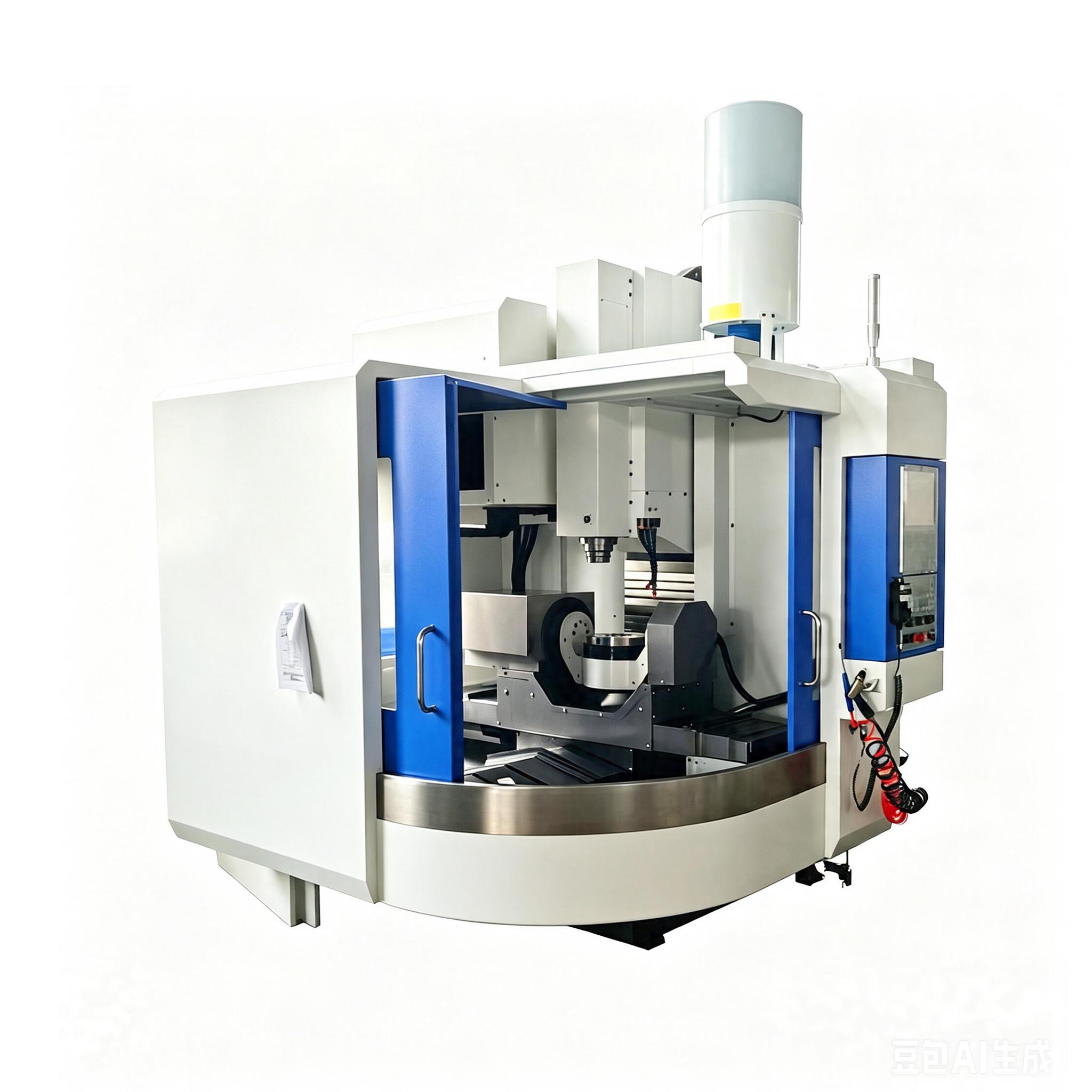
A compact 5 axis machining center can reduce floor space and suit smaller precision parts, but “compact” must not be confused with unrestricted capability. The useful envelope changes as the table tilts, and the fixture, holders and tools occupy much of the available space. Selection should prove the target part family in the exact machine kinematics.
Measure the part family, not one sample
Identify the widest raw stock, tallest setup, heaviest fixture and longest required tool across planned jobs. Then model their critical orientations. A machine that handles today’s demonstration part may block a clamp or holder on the next variant. Reserve reasonable clearance for probing, safe retracts and chip flow.
| Compact-machine advantage | Condition for realizing it |
|---|---|
| Reduced floor demand | Service doors, chip equipment and loading still fit the cell |
| Shorter axis motions | Operations remain within the usable tilted envelope |
| Potential for automation | Robot or pallet access is designed with guarding and recovery |
| Concentrated process | Magazine and workholding cover the actual job mix |
Do not overlook tools and probes
A small enclosure makes holder interference especially important. Build a tool list with gauge lengths, diameters and neighboring-pocket limits. Confirm probe storage and calibration. If manual tool changes are expected, check operator access without introducing unsafe reaches or contamination of locating surfaces.
Plan an automation boundary
Compact five-axis machines are often considered for pallet or robotic cells. Define who controls doors, clamps, part confirmation and restart after a rejected load. Fault recovery should prevent an uncertain part or offset from returning to automatic cutting. The machine’s physical footprint is only one part of the complete guarded cell.
Prove capability with the difficult pose
A good demonstration includes the angled feature with the least clearance or greatest relationship risk. Use the intended fixture and holder, then inspect by an agreed method. A simple vertical sample does not establish the reason for buying five axes.
Provide CNC Tech with several representative models, not just maximum dimensions. The machine recommendation can then balance footprint against access, tool capacity and future cell needs.
Compact five-axis references: review the U400 bridge-type machine and CNC Tech’s guide to probing, tooling and automation.