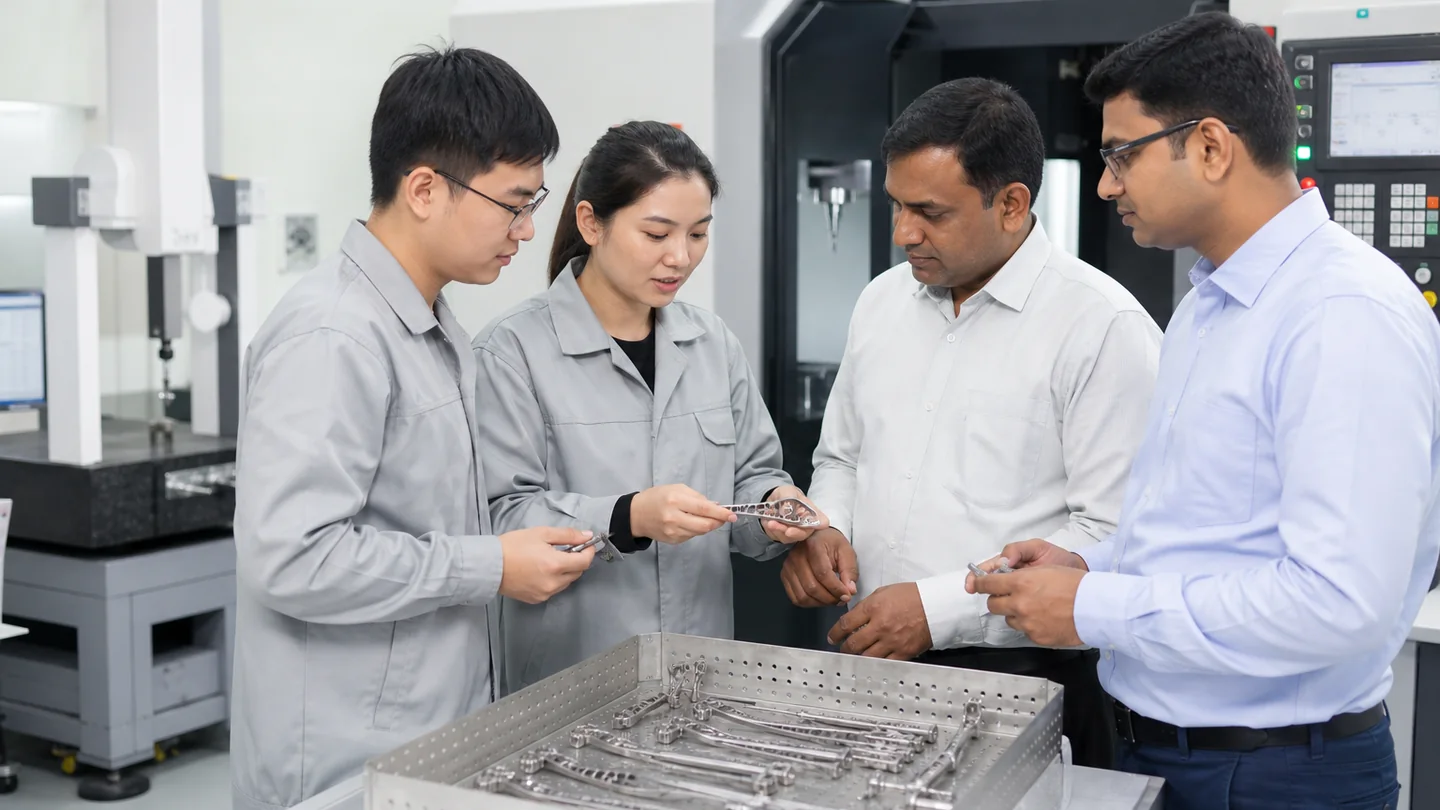
A CNC machining center for medical components must be selected within the manufacturer’s validated quality and regulatory process. The machine can provide controlled motion and documented production data, but it does not make a component compliant by itself. Equipment requirements come from the authorized drawing, material, risk controls, traceability and inspection plan.
Define the component without broad assumptions
Medical work can include instrument parts, device housings, implants and production tooling, each with different materials and controls. Record geometry, stock condition, batch size, critical features and prohibited handling. Identify small tools, deep features and surfaces that benefit from fewer setups or five-axis access.
Assign process and record ownership
The component manufacturer is responsible for qualification, change control, calibration, traceability and release. Establish how programs, offsets, tools, fixtures and inspection results are approved and retained. If machine data is collected, define which record is authoritative and how access is controlled.
- Use material-compatible tools, fluids and cleaning processes approved for the job.
- Design workholding to avoid distortion and uncontrolled surface contact.
- Control tool replacement and the status of parts made around a failure.
- Separate accepted, rejected and uncertain work through recovery.
- Validate any automation that influences identification or process sequence.
Include cleaning and contamination controls
The machining cell is only one step. Define removal of chips, coolant and residues, followed by handling and packaging appropriate to the approved process. Do not infer cleanliness or biocompatibility from the machine enclosure or coolant option. Those outcomes require component-specific validation.
Use acceptance evidence within scope
A representative sample can test machine and process feasibility, but production approval follows the manufacturer’s own system. Agree on tools, fixture, program, environment and measurement for the equipment test. State clearly what the result does and does not establish.
CNC Tech can review authorized, non-confidential application data and propose a machining platform with declared assumptions. Regulatory or end-use approval remains with the responsible manufacturer and its customer.
Medical-component context: see the medical-equipment machining solution and the related component-production case.