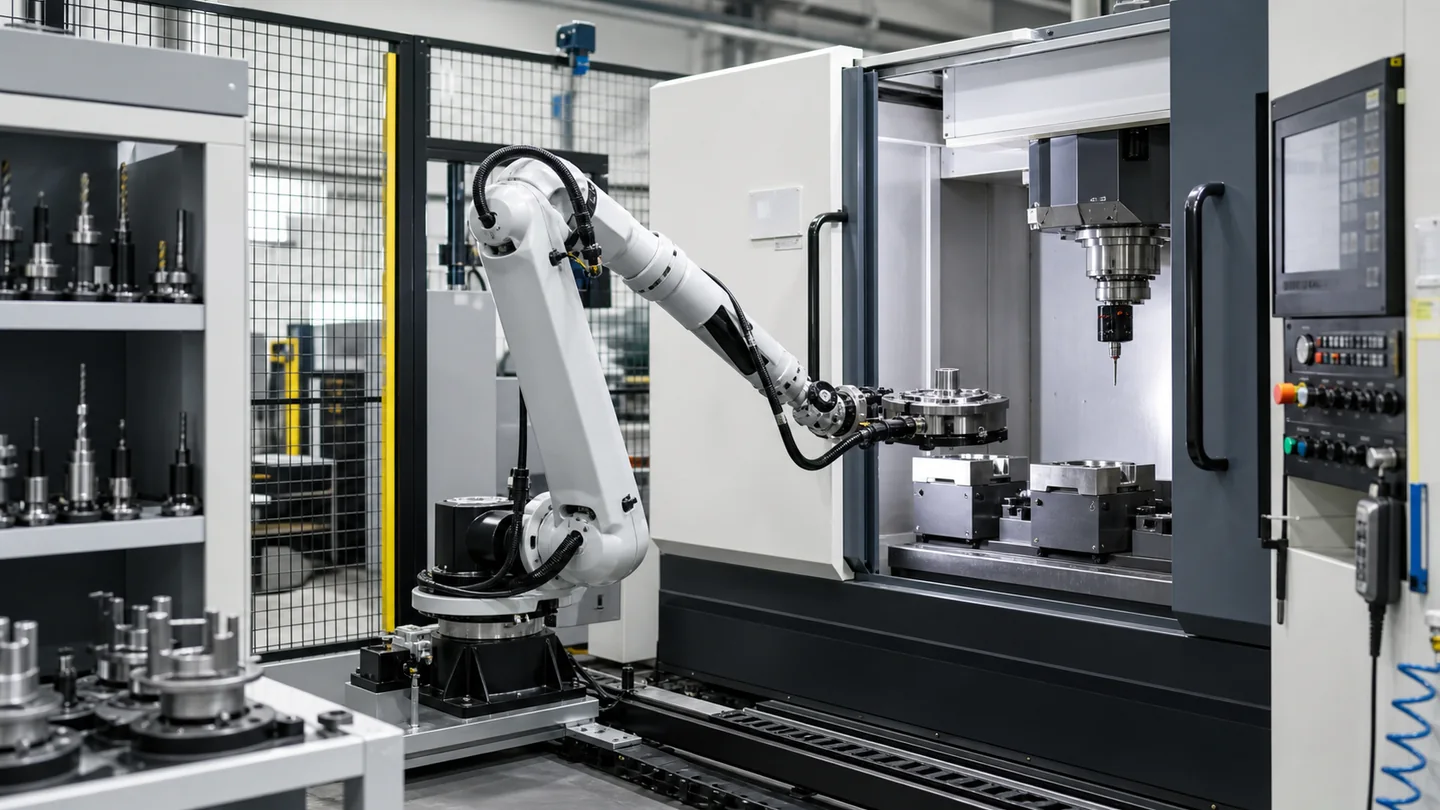
CNC automation works when the machining process can recognize normal conditions, contain predictable variation and recover from faults without creating unsafe or uninspected parts. Probing, tool management and robot loading solve different parts of that problem. Installing all three at once will not rescue an unstable fixture, inconsistent blank or unreliable program.
Start with the failure modes
List what can stop or corrupt the cycle before choosing hardware: a blank may be misloaded, a tool may wear early, a chip may hold the part off a locator, a probe may fail calibration or an operator may enter a guarded area. For each event, decide how it is detected, what the machine does next and who is allowed to recover it.
This exercise changes the automation discussion from “Which robot should we buy?” to “Which uncontrolled step prevents unattended production?” The answer is often found in workholding, tool-life data or part presentation rather than robot payload.
Three building blocks, three jobs
| Building block | Useful role | Common planning mistake |
|---|---|---|
| Workpiece probing | Confirm presence, locate a datum and check selected features in the machine | Treating an in-machine check as a substitute for the full inspection plan |
| Tool measurement and life control | Detect selected tool conditions and call a sister tool under defined rules | Using a fixed life value without considering material, breakage and tool history |
| Robot or cobot loading | Move blanks and finished parts through a repeatable handling sequence | Ignoring gripper access, chip contamination, part orientation and fault recovery |
A sensible implementation order
- Stabilize the manual cycle. Confirm fixtures, datums, tool list, chip control and inspection results over enough runs to expose normal variation.
- Add detection. Use probing, pressure checks, part identification or tool monitoring where a specific failure needs to be caught.
- Define recovery states. Document what happens after a broken tool, rejected part, power loss or interrupted robot cycle.
- Automate handling. Select the loading device only after the blank, orientation, queue size and access path are known.
- Prove safe operation. Validate guarding, interlocks, risk controls and maintenance access under the applicable rules.
Data is useful only when someone owns the response
A machine can collect alarms, offsets, tool events and cycle states, but a dashboard does not correct the cause. Assign owners and response limits before sending more data to a production system. The MTConnect standard is one reference for representing manufacturing equipment data; the tags selected should still support a defined maintenance or production decision.
Know the limit of unattended running
Part mix, batch size, chip behavior, tool risk and inspection frequency decide how long a cell can run without intervention. A repeatable aluminum housing is different from a low-volume hard-material part with long tools and uncertain stock. Begin with a controlled operating window, review every stop and expand only when the evidence supports it.
When planning interfaces on a new machine, include the fixture, I/O, door operation, safety concept, probe package, tool capacity and recovery procedure in the same review. Send CNC Tech the part and proposed cell layout so the machine-side scope can be defined before delivery.