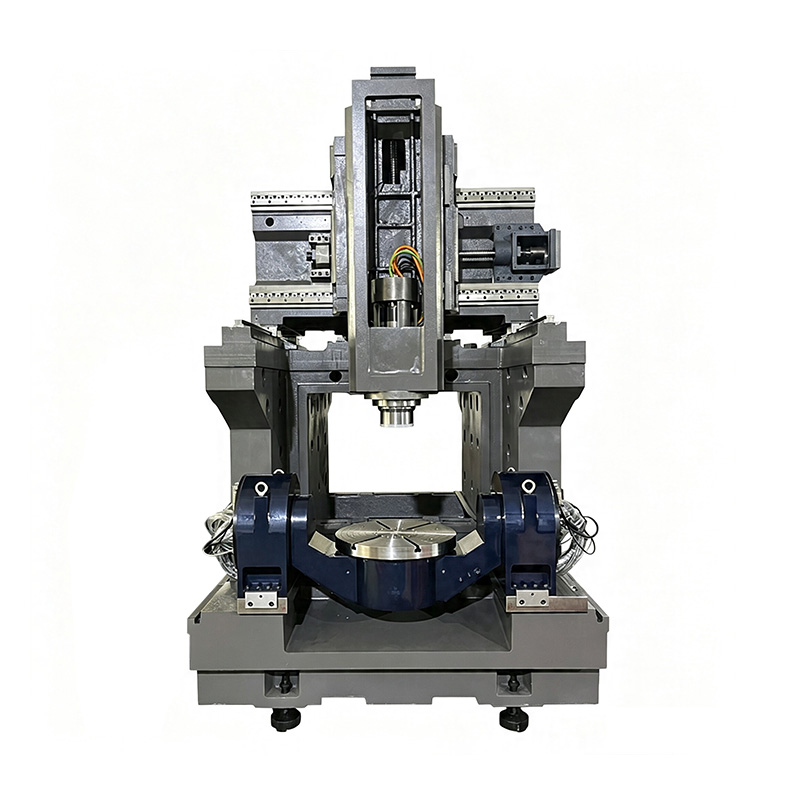
For a 3 axis vs 5 axis machining center decision, use three axes when features are accessible from a small number of stable orientations and simple workholding meets the relationships. Use five axes when changing tool direction reduces critical setups, shortens tools or enables complex surfaces. Additional motion creates value only if the process uses it.
Draw the tool direction for every feature
Mark faces, holes, walls and surfaces by their required approach. Group features that can be cut in one orientation. If a three-axis machine can complete them with an indexed fixture and acceptable datum transfer, it may offer the simpler route. If repeated reclamping threatens location or access, five axes deserve evaluation.
Compare complete workflows
| Factor | 3 axis route | 5 axis route |
|---|---|---|
| Workholding | May use several fixtures or orientations | Can expose more faces in one fixture |
| Programming | Usually simpler kinematics | Needs validated post and collision model |
| Tool reach | May need longer tools for deep access | Orientation may allow shorter tools |
| Maintenance | Fewer axes to calibrate | Rotary geometry requires control |
| Inspection | Must manage relationships across setups | Must verify multi-axis relationships |
Do not count setups without their work
A setup includes cleaning, loading, locating, clamping, probing, program confirmation and possible in-process inspection. Time these steps and include queue or transfer risk. Five axes can remove some of that work, but complex fixturing, longer programming or lower pallet density may offset part of the gain.
Account for organizational readiness
Five-axis production needs suitable CAM, a machine-specific postprocessor, simulation, tool data, operator training and calibration routines. If those resources are not ready, include them in cost and launch time. Three-axis production also needs discipline, but the kinematic chain is generally narrower.
Test the feature that drives the choice
For five axes, cut the angled relationship or complex surface that cannot be proven vertically. For three axes, include the planned transfer if the part needs multiple setups. Use the same drawing and acceptance method.
CNC Tech can review both process routes from the part model and volume. The result should show setup, tooling and verification differences—not simply recommend more axes.
Related process guidance: read how five-axis work can remove setups and compare the broader machining center types.