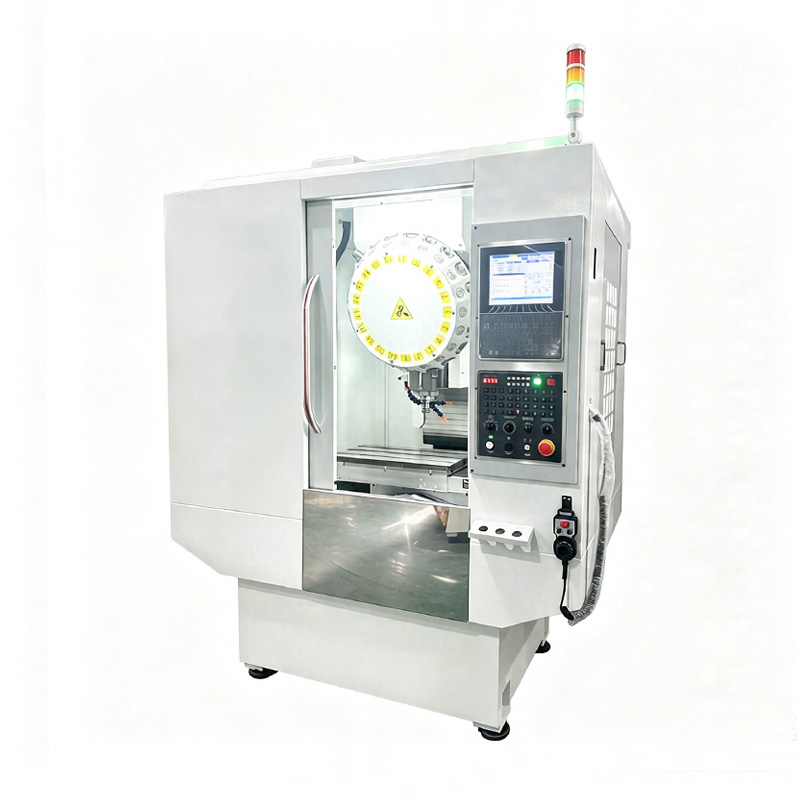
A CNC drill tap center is designed for fast drilling, tapping and light milling of compact parts. It can be an efficient choice when tool changes and repeated hole operations dominate the cycle. Selection should still be based on the material, hole schedule, milling demand and workholding; rapid motion alone does not establish part quality or productive output.
Turn the drawing into an operation list
Count drilled, reamed, bored and threaded features by size and depth. Add milled faces, pockets and contours, then list the planned tools and holders. This exposes spindle, coolant and magazine needs. It also shows whether tool changes are likely to constrain a complex part.
Separate speed from cutting suitability
Spindle speed must be evaluated with available torque, holder interface, tool balance, material and cutter size. Aluminum housings and small threaded components can suit a drill-tap platform, while heavy steel roughing or large face mills may point to a more robust VMC. Use the most demanding normal operation as a selection boundary.
| Area | Information to supply | What to confirm |
|---|---|---|
| Workpiece | Stock, fixture, mass and datums | Usable travel and access |
| Holes | Diameter, depth, thread and tolerance | Coolant, tooling and cycle strategy |
| Milling | Cutter and engagement | Spindle duty and stability |
| Production | Batch, shifts and changeover | Automation and magazine scope |
Design chip control around the fixture
Small chips can collect in pockets, under fixtures and around locating surfaces. Review nozzle access, through-tool coolant where needed, washdown and conveyor or filtration options. Cleaning time belongs in the cycle study, especially when the next load depends on clean locating faces.
Test the whole cycle
A convincing trial uses the intended material, representative tools and real operations. Record cutting, tool-change, probing and handling time separately. Inspect the features that drive acceptance and document warm-up and measurement conditions. This produces evidence that can be compared across machines.
Provide CNC Tech with the model, hole schedule, tool list and target production rhythm. The recommendation can then distinguish a suitable drill-tap center from a VMC or rotary-equipped alternative.
Drill-tap selection resources: review the T7S drill-tap center and the RFQ information suppliers need.