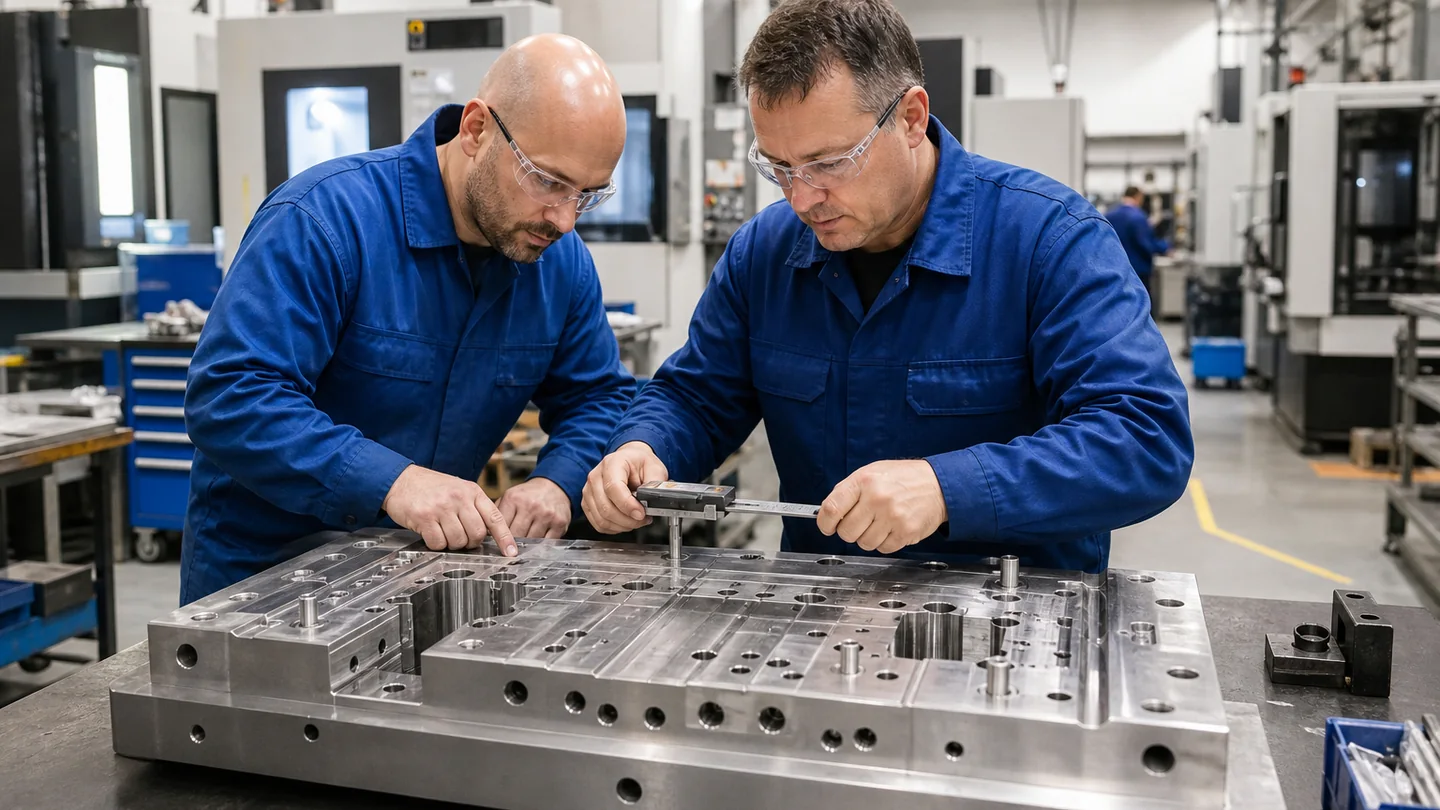
A custom CNC machine manufacturer should convert a requirement that standard equipment cannot meet into a controlled engineering project. Custom work may involve travel, workholding, guarding, spindle, probing, automation or software interfaces. The benefit is a closer process fit; the risk is that assumptions remain hidden until build or commissioning. Requirements, interfaces and validation therefore matter more than the word “custom.”
First prove that customization is necessary
Compare the requirement with standard machines and documented options. A standard base with a proven rotary table, probe or coolant package may carry less schedule and service risk than a one-off design. Customize only the constraint that blocks the process, and keep standard components where they meet the need.
Freeze inputs in stages
- Application baseline: approved part revisions, material, blank, volumes, operations and critical features.
- Concept review: machine layout, fixture, access, interfaces and identified technical risks.
- Design release: selected components, drawings, utilities, safety scope and acceptance method.
- Build review: approved deviations, open items and evidence needed before testing.
- Handover: as-built documents, backups, spares, training and maintenance requirements.
Put every interface under one owner
| Interface | Decision to document | Typical failure if omitted |
|---|---|---|
| Machine to fixture | Datums, clamps, services and collision envelope | The part fits but cannot be clamped or reached |
| Machine to automation | I/O, door sequence, signals, faults and safety boundary | Separate suppliers deliver incompatible assumptions |
| Control to software | Options, post processor, data exchange and backups | Programming or recovery is delayed at site |
| Factory to site | Foundation, transport split, lifting and utilities | The completed machine cannot be installed as planned |
Manage change by effect, not by email count
Every proposed change should state its reason and its effect on price, delivery, performance, maintenance, documents and validation. The latest approved specification must remain identifiable. Small late changes can carry large consequences when they affect guarding, control options or the test program.
Validation must cover the custom feature
Standard factory tests remain useful, but they may not exercise the new interface or extended work envelope. Add a test tied to the reason for customization. Define material, fixture, tools, program, conditions, measurement and pass criteria before the machine reaches the test stage.
Protect serviceability after delivery
Record nonstandard parts, supplier part numbers, source drawings, software versions and recovery backups. Confirm which modifications the buyer may maintain and which require manufacturer approval. A custom machine that cannot be diagnosed or supplied with parts creates a new production risk.
For a feasibility review, send CNC Tech the limiting part, existing process and factory interfaces through the contact page. The output should be a defined proposal with limitations and acceptance steps, not an unsupported promise that any configuration is possible.