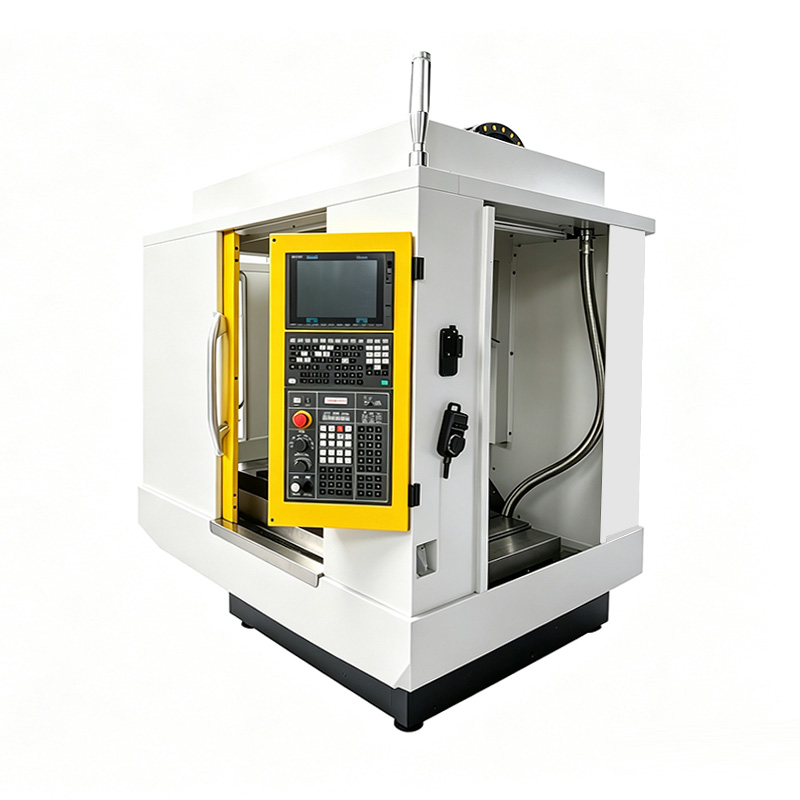
Drill tap center spindle speed should be selected from the tool, material and operation, not by choosing the largest catalog number. Small tools may need higher rotational speed to reach an appropriate cutting speed, while larger drills and mills may need more torque at lower speed. The useful spindle is the one that covers the real tool list with acceptable stability and duty.
Calculate from each important tool
For a rotating tool, cutting speed relates to diameter and spindle speed. Use the tool maker’s recommendation as a starting range, adjusted for material, coolant, engagement and machine condition. Build a table for the smallest critical drill, common taps, finish cutters and largest milling tool. This reveals how often the process would operate near a limit.
| Check | Why maximum rpm is insufficient |
|---|---|
| Torque and power curve | Available cutting force changes across the speed range |
| Tool and holder rating | The complete assembly has its own approved limit |
| Balance and runout | Small tools and high speed are sensitive to assembly condition |
| Bearing and duty rules | Continuous operation may differ from a short peak |
| Tapping method | Control, acceleration and tool behavior affect the cycle |
Consider acceleration and time at speed
Short drilling cycles can spend meaningful time accelerating between tools. A higher top speed may add little if it is used briefly or reached slowly. Measure the programmed cycle with the proposed spindle and include tool-change and orientation time. Published rapid rates do not replace a part-based test.
Protect the tool interface
Clean tapers, correct pull studs, balanced holders and controlled gauge length are essential at speed. Define inspection and replacement routines. Never run a tool, holder or accessory beyond its manufacturer’s approved condition, even if the spindle itself has a higher rating.
Choose the balanced configuration
If the process mixes many small holes with occasional heavy milling, compare the cycle and cutting evidence for each spindle option. A second machine or revised operation split can sometimes be better than asking one spindle extreme to cover incompatible duties.
Provide CNC Tech with materials, tool diameters, target cutting conditions and duty cycle. The spindle-speed recommendation can then be tied to the process rather than a marketing maximum.
Spindle and maintenance context: pair the tool calculation with the machining-center maintenance checklist and T745 spindle configuration.