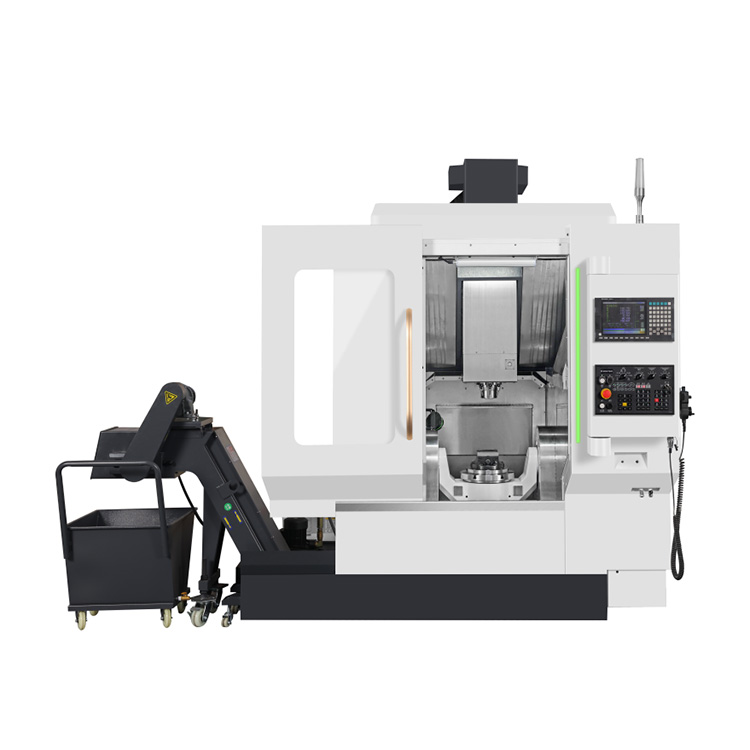
In 3+2 vs simultaneous 5 axis machining, use 3+2 when the rotary axes can index to a fixed orientation and the cut then proceeds with three linear axes. Use simultaneous five-axis motion when tool orientation must change during the cut. Many parts benefit from both methods in one program, with each operation using the simplest motion that meets access and surface requirements.
Where 3+2 is usually sufficient
Angled holes, planar faces, pockets and features on several sides can often be indexed into a stable orientation. This may shorten tools and remove reclamping while keeping the cutting motion straightforward. Rotary axes remain clamped or stationary during the cut, subject to the machine’s design and programmed method.
Where simultaneous motion is needed
Impeller blades, changing surface normals, certain ports and complex side-wall strategies can require continuous orientation. The CAM system controls tool contact and avoidance through the motion. This adds sensitivity to the postprocessor, kinematic model, tool data and rotary-axis condition.
| Factor | 3+2 indexed | Simultaneous 5 axis |
|---|---|---|
| Orientation during cut | Fixed | Continuously changing |
| Programming | Generally more direct | Requires multi-axis strategy and validation |
| Best evidence | Angled feature and cross-orientation relationship | Representative continuous surface |
| Collision review | Every indexed pose and transfer | Entire toolpath and transitions |
Do not equate simultaneous motion with better quality
Quality depends on the selected strategy, tooling, machine, setup and measurement. Unnecessary rotary movement can lengthen programming or introduce avoidable dynamics. Conversely, forcing a changing surface into many indexed patches can create transitions or extra handling. Compare results on the actual geometry.
Validate both workflows
Use the physical machine model, holders, tools and fixture in simulation. Control the postprocessor version and calibration data. For acceptance, inspect the feature that justifies the method under recorded conditions. A general five-axis demonstration does not answer this process choice.
Send CNC Tech the part model and planned CAM platform. The application review can divide operations between 3+2 and simultaneous motion and identify what must be proven.
Five-axis decision support: start with the setup-reduction guide and then review the U650 machine layout.