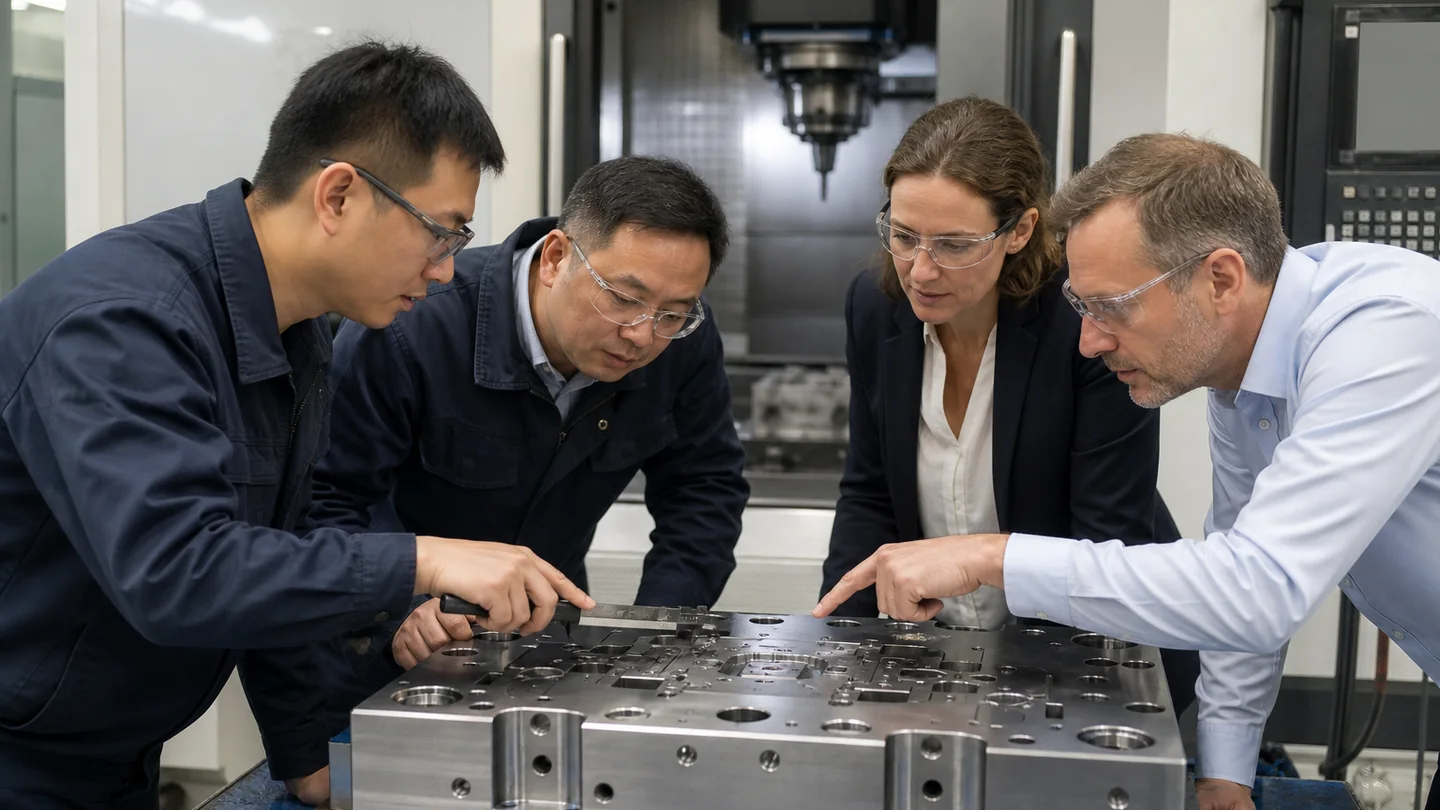
A vertical machining center for mold making must support the complete route from stock preparation and roughing to semi-finishing, detailed surfaces and inspection. Mold size matters, but tool reach, spindle behavior, thermal stability, control functions and chip evacuation often decide whether the planned surface can be produced consistently.
Start with the deepest feature
Review cavity depth, wall angle, corner radius and electrode or insert interfaces. Long tools reduce stiffness and may force smaller cuts. Tilting the work on a rotary axis can shorten reach for some molds, while a straightforward three-axis setup may remain better for open cavities and accessible surfaces.
Split roughing and finishing requirements
| Stage | Main machine concern | Process evidence |
|---|---|---|
| Roughing | Torque, chip volume, tool stability and coolant | Material-removal plan and holder clearance |
| Semi-finishing | Stock consistency and thermal condition | Rest-material strategy and measurement points |
| Finishing | Spindle condition, control motion and tool runout | Surface toolpath, tool list and sample area |
| Detail work | Small-tool speed, reach and collision risk | Simulation and minimum feature review |
Do not reduce surface quality to spindle speed
Commanded speed is only one input. Holder balance, tool runout, acceleration, block processing, toolpath spacing, machine condition and material all influence the surface. Ask the supplier to review a representative finishing path rather than promising a finish from one catalogue value.
Control temperature and inspection timing
Large mold cycles may run long enough for thermal drift to appear between roughing and final measurement. Define warm-up, stabilization, probe checks and when critical dimensions are inspected. If a sample cut is used for acceptance, record the exact tools, program, material and measuring method.
Choose the machine around the mold family
Send the largest and most detailed molds, not only an average part. Include blank mass, fixture, required reach, material hardness and target surface. CNC Tech can then compare a VMC, rotary-equipped machine or gantry layout without assuming that one mold-making label fits every toolroom.
For mold applications: review the mold-manufacturing solution and the documented precision mold application case.