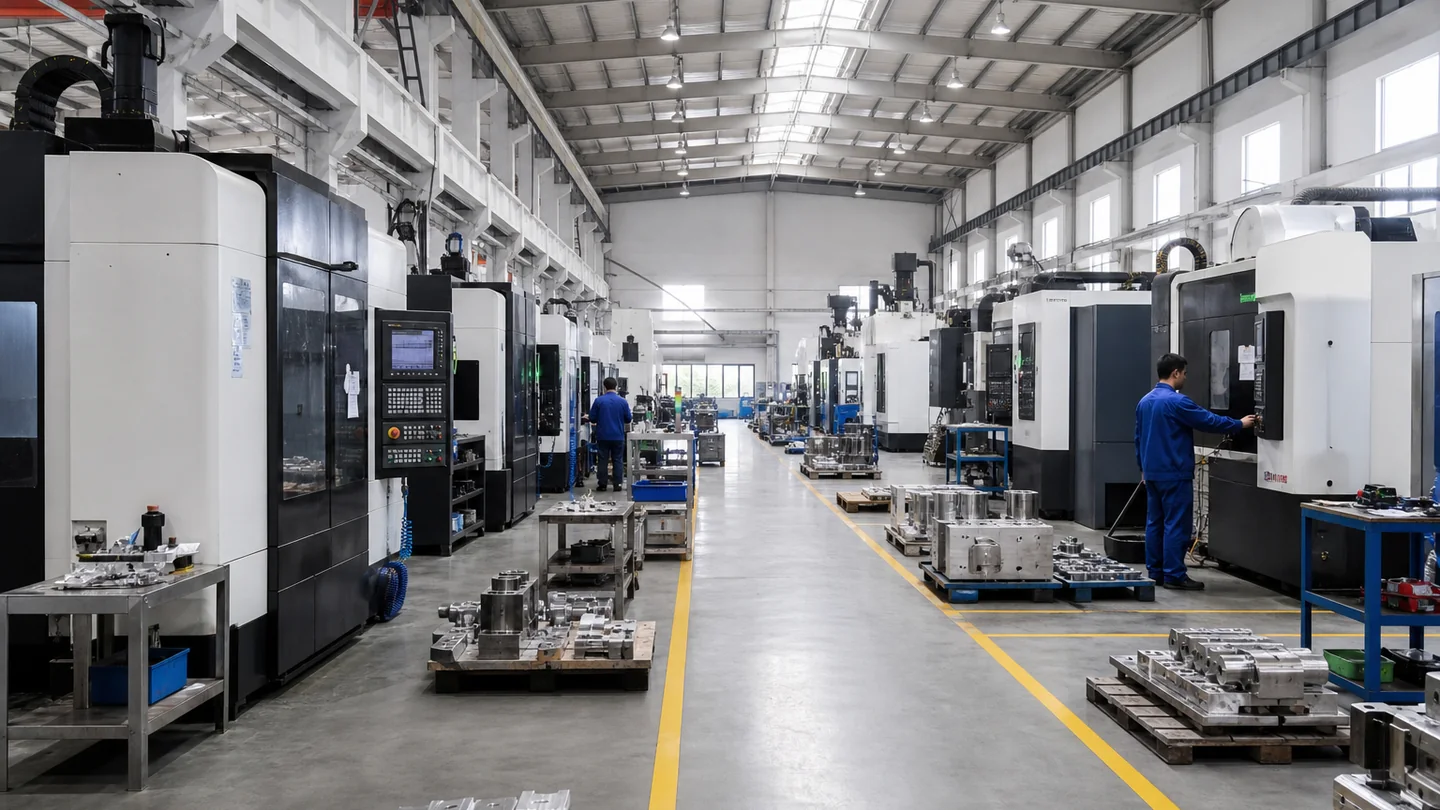
An industrial CNC machine for sale is production-ready only when the offered configuration can sustain the intended part family, duty and factory environment. “Industrial” is not a measurable specification. Buyers should define the load case, shifts, process, inspection, chip and coolant demand, automation and support expectations, then test the offer against those conditions.
Describe the production duty
Record material, stock removal, tool engagement, cycle pattern, shifts and expected utilization. A demonstration cut may run for minutes, while production repeats heat, chips, tool changes and handling for hours. Ask the supplier to state any duty assumptions behind the spindle, coolant, chip conveyor and maintenance recommendation.
Buy the cell that surrounds the machine
| Cell element | Decision to make | Cost if left undefined |
|---|---|---|
| Workholding | Fixture concept, clamps, datum access and changeover | Machine waits while a usable fixture is redesigned |
| Tooling | Holder standard, tool list, gauge lengths and presetting | Travel and cycle assumptions no longer hold |
| Coolant and chips | Delivery, filtration, separation and disposal route | Unstable cutting or manual cleanup limits output |
| Inspection | In-process checks, final measurement and data ownership | Parts run without a clear release decision |
| Handling | Manual, crane, pallet or robot loading | Unsafe access or a handling cycle longer than expected |
New, configured stock or custom build?
A configured stock machine can shorten delivery when its base layout already fits the process. A custom build is appropriate when work envelope, interfaces or performance cannot be met by standard options, but it adds engineering and validation work. The right choice depends on the consequence of compromise, not on which label sounds more advanced.
Ask for a release plan, not a demonstration
Factory acceptance should verify the ordered machine and options, safety functions, documents and selected performance tests. When a representative part is used, control the material, tools, fixture, program, conditions and measurement. Open items need owners and closure dates before shipment.
Calculate the first year, not the invoice alone
Add site preparation, freight, duties, lifting, installation, training, workholding, tooling, coolant, inspection equipment, critical spares and ramp-up time. Keep recurring consumables separate from capital items. This does not make every project more expensive; it makes competing offers comparable.
Set the boundary of the claim
No general sales page can confirm finished-part tolerance, cycle time or output for an unknown application. Those values belong in the approved technical proposal and acceptance record. Browse the CNC Tech product families to identify a possible layout, then send the production case for a configuration review.