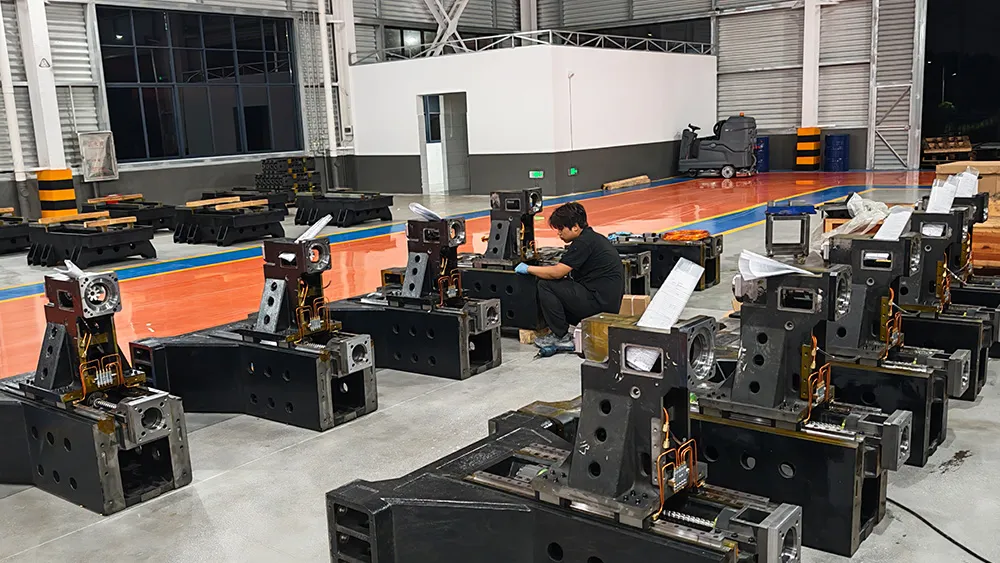
A double column machining center supports large or heavy work between two columns and beneath a bridge. Its value comes from matching usable clearance, structural duty and process access to the real setup. Buyers should compare configurations on the same workpiece drawing because catalogue travels do not reveal clamp interference, head geometry or tool reach.
Usable space is smaller than headline travel
Column spacing must clear the work, fixtures and safe loading route. The distance beneath the bridge must accommodate the stacked height of pallet or table, fixture, part, tool and holder. If interchangeable heads are planned, include their length and change position. Check every operation at axis limits, especially side features near the columns.
Fixed or moving crossrail
A fixed crossrail offers a straightforward structure for a defined height range. A movable crossrail can serve taller and more varied work, but adds mechanisms, locking and setup considerations. The right choice depends on the part family; extra range has little value if it is never used, while inadequate height can force long, flexible tooling.
- State the maximum setup mass and where its center of gravity sits.
- List materials, cutter sizes and the longest roughing engagement.
- Identify surfaces that need one-setup relationship control.
- Show how the part will be loaded, aligned, probed and removed.
- Define chip types, coolant needs and access for cleaning.
Match the spindle and ram to the operation mix
Deep cavities and side features may require a long ram or attachment, while heavy face milling asks for a short, stiff force path. High speed finishing places different demands on runout, thermal behavior and control motion. If one machine must do both, review the compromises explicitly and test the operation that carries the greatest commercial risk.
Commissioning is part of machine performance
Foundation preparation, leveling, assembly, temperature and measurement method affect the final result. Put acceptance items, instruments, warm-up and correction rules in the purchase specification. Keep factory and site tests distinguishable so each party knows what must be repeated after transport.
CNC Tech can review a double-column application from drawings and process information. A sound recommendation should name the exact head, spindle, clearance, table condition and test plan rather than assume that a bigger frame is automatically a better fit.
Related CNC Tech pages: examine the 6565 gantry configuration and the company’s large gantry machining capability.