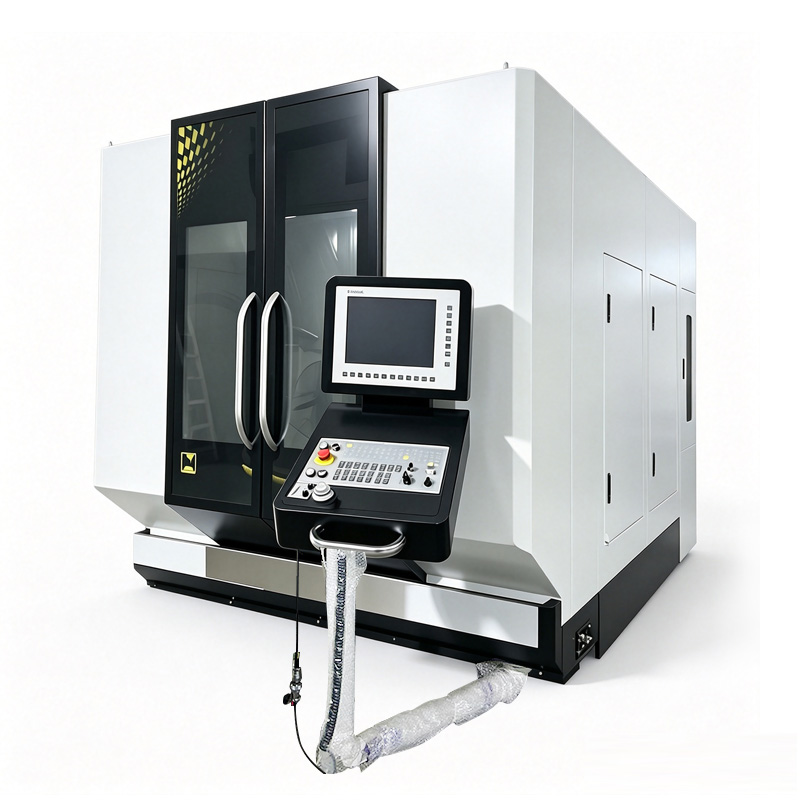
A bridge type vs gantry machining center comparison must begin by defining each supplier’s architecture. The terms are used inconsistently: some companies call any double-column machine a gantry, while others reserve gantry for a moving bridge or moving structure. Compare which member moves, how the part is supported and what usable envelope remains—not the label alone.
Ask for a motion diagram
Request a simple drawing showing table, columns, bridge, crossrail, ram and axis directions. Establish whether the table moves under a fixed bridge, the bridge moves over a stationary table, or both descriptions refer to variants in one family. This immediately exposes floor, mass and loading implications that names hide.
| Question | Why it changes the choice |
|---|---|
| Does the workpiece move? | Large mass and center of gravity affect dynamics and support |
| What is the true column clearance? | Fixture and clamps reduce usable width |
| How is height adjusted? | Fixed or moving crossrails suit different part families |
| Which heads are available? | Vertical, angled or five-axis access changes the process |
| How is the machine installed? | Foundation, sections and site assembly affect acceptance |
Evaluate mass in motion
A moving-table design moves the loaded setup; a moving-bridge design moves more of the machine structure while the work remains stationary. Neither fact alone decides performance. The manufacturer must engineer guides, drives and controls for the stated load and duty. Ask for the approved load distribution and representative cutting evidence.
Compare access and material flow
Check crane approach, door opening, operator access, chip paths and service clearance. Long parts may benefit from a stationary support or open loading route, while other facilities favor a contained moving-table arrangement. Put the proposed layout into the building drawing before commercial selection.
Use identical acceptance criteria
Positioning, geometry and sample-part tests should use the same definitions and conditions for both architectures. If transport requires disassembly, specify which tests repeat after installation. A category-level claim cannot replace measured performance on the offered machine.
Send CNC Tech the part, setup and facility layout. The comparison can then name the physical architecture of each proposal and avoid a decision based on ambiguous terminology.
Architecture examples: inspect the 8080 gantry center and CNC Tech’s large-gantry production page.