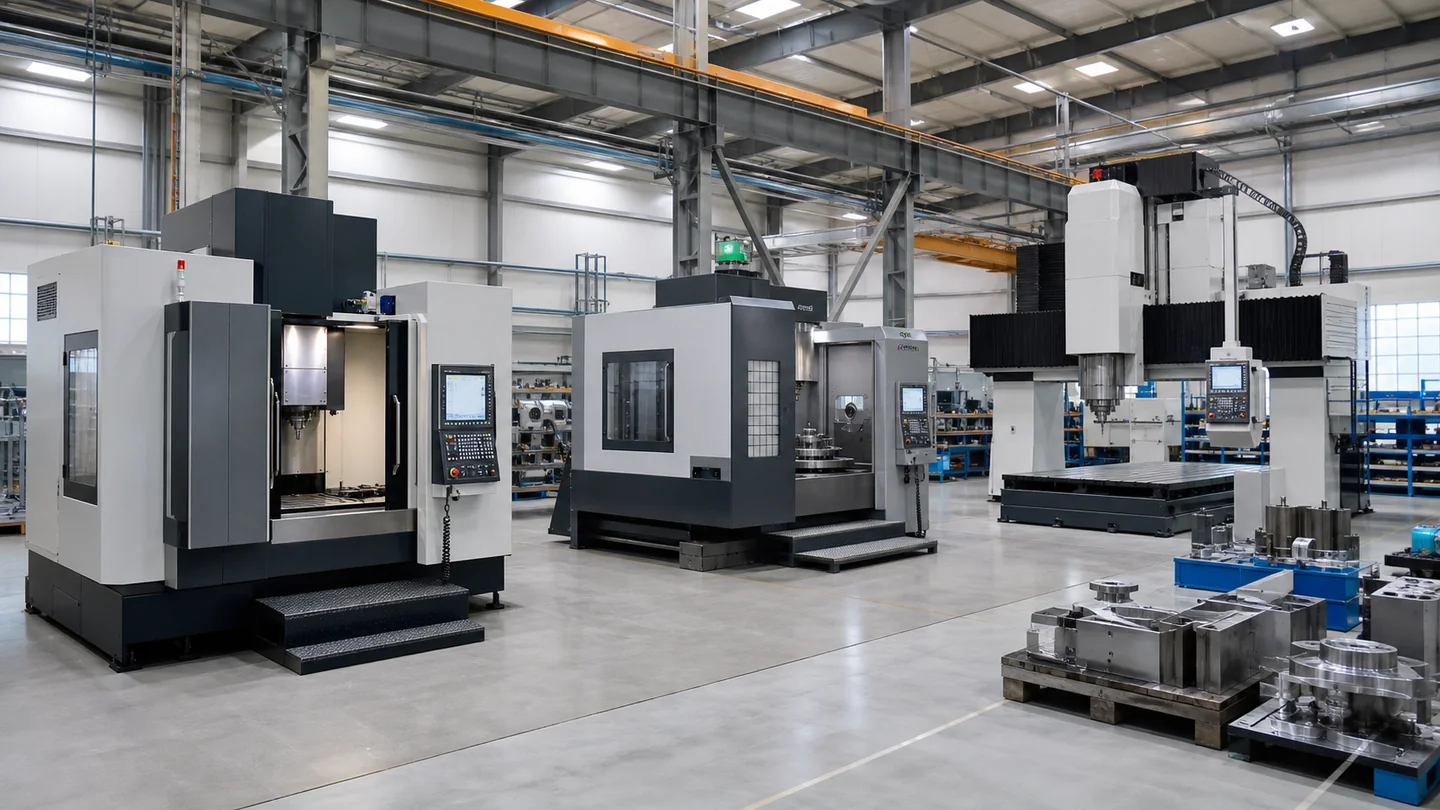
To choose a CNC machining center, begin with the parts, fixtures and process—not a preferred machine model. Define the usable work envelope, materials, cutting duty, axes, tool list, accuracy evidence and production pattern. Then compare machines against one written requirement and a reproducible acceptance plan.
1. Describe the loaded part family
List minimum and maximum stock sizes, mass, fixture height, clamp space and center of gravity. Add the longest tool and holder. Check this complete setup against usable travel, spindle-to-table distance, column clearance and loading access. Nominal table size alone does not establish fit.
2. Translate drawings into operations
Identify roughing, finishing, drilling, tapping, boring and angled features. State material and expected cutter engagement. This separates machines optimized for rapid small-tool work from those intended for heavier removal. It also shows whether three axes, indexed 3+2 or simultaneous five-axis motion is actually required.
3. Build the tooling and support scope
| System | Questions to answer |
|---|---|
| Spindle | Which tools define speed, torque, interface and duty? |
| Magazine | Does the full tool list fit with size restrictions? |
| Coolant and chips | What material, chip volume, filtration and delivery are needed? |
| Control | Which probing, transformation, memory and connectivity functions are required? |
| Workholding | How are the part, datum and clamp state controlled? |
4. Define proof before price comparison
State geometric, positioning and part-test requirements, including warm-up, environment, instruments and who supplies each item. ISO 230-2 can help frame positioning accuracy and repeatability tests for numerically controlled axes. Use the standard edition and test conditions agreed in the contract.
5. Evaluate the delivered system
Normalize accessories, freight, installation, training, postprocessing, warranty and service. Check the building foundation, power, air, lifting and maintenance space. A machine that meets the cutting requirement but cannot be installed or supported economically is not the right selection.
Send CNC Tech drawings, the operation list and site information for an application review. The recommendation should explain why a VMC, drill-tap, gantry or five-axis configuration fits—and state what still needs testing.
Put the method into practice: use the machine-type selection guide and the CNC RFQ checklist.