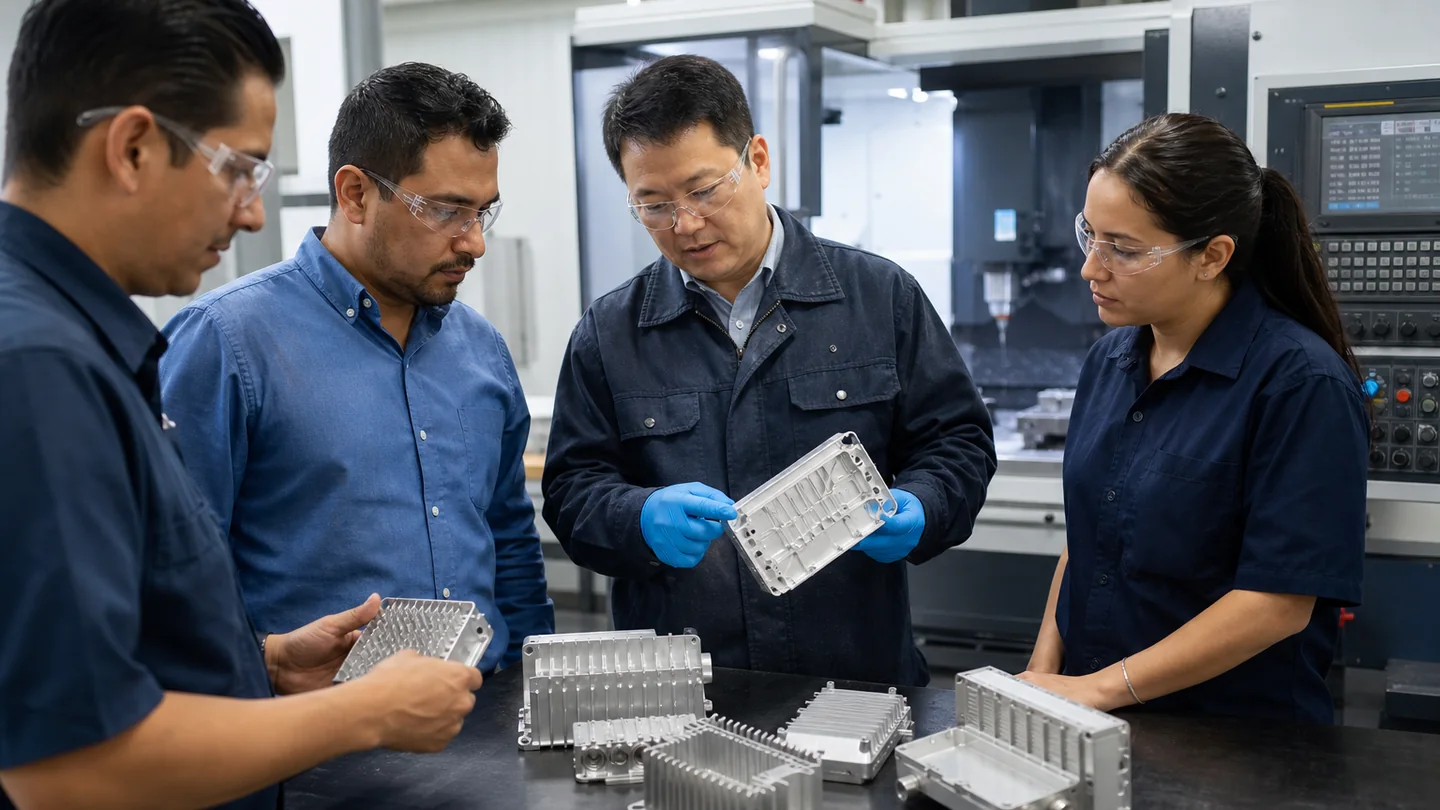
A CNC machine for electronic hardware should be chosen around the specific enclosure, heat sink, connector body or structural component. These parts often combine thin walls, small holes, cosmetic surfaces and close feature relationships. Fast motion helps only when workholding, tool runout, burr control and chip removal support the same quality target.
Separate cosmetic and functional requirements
Mark sealing faces, thermal interfaces, connector locations and visible surfaces. Define where clamp marks, tool witness or burrs are unacceptable. This guides fixture contact, operation order and handling. Surface appearance should be judged with an agreed sample and inspection condition rather than a broad “high finish” statement.
Review the smallest tools first
Small drills and mills make spindle condition, holder quality and runout important. Confirm tool and holder ratings, appropriate cutting data and chip evacuation for the material. Tool-life assumptions should be proven in the real alloy and feature depth; a short demonstration does not establish unattended life.
| Risk | Process response |
|---|---|
| Thin-wall distortion | Support the part and balance stock removal |
| Small-hole chip packing | Match tool, cycle and coolant delivery |
| Cosmetic damage | Control contact, chips and inter-operation handling |
| Burrs near openings | Plan edge treatment and inspection |
| Mixed variants | Use positive part identification and controlled offsets |
Plan cleanliness beyond the machine
Coolant residue and fine chips can remain in passages or pockets. Define washing, drying and protection before packaging or downstream assembly. If dry machining or extraction is considered, review it against material and facility safety requirements. Cleanliness is a process outcome, not a machine option alone.
Choose the platform from the duty
A compact drill-tap center may suit repeated aluminum parts with many tools, while a VMC may better cover larger cutters or broader materials. Multi-axis equipment can reduce reclamping for features on several faces. Compare these routes with the actual cycle and inspection plan.
Send CNC Tech the part family, material, surface notes, tool list and volume. The proposal can then address small-feature stability and handling instead of relying on an electronics label.
Electronic-hardware resources: review the industry solution page and CNC Tech’s hardware-production case.