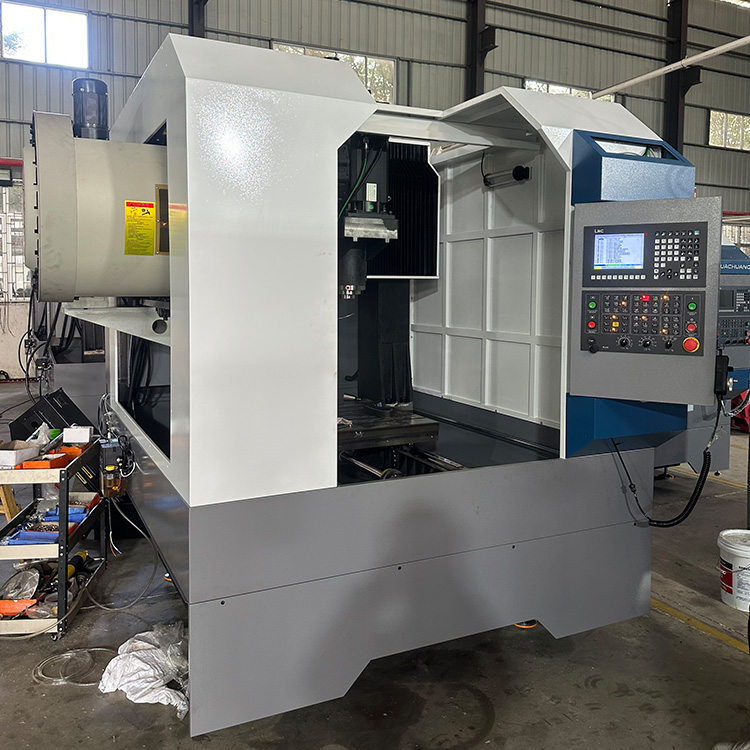
What to know before buying a used CNC machine is a condition-and-process question. A low purchase price does not prove that the machine can hold the required geometry, support the tooling or be installed economically. This checklist helps a buyer inspect a used CNC machine without inventing a remaining service life or relying on a seller’s adjective.
Start with identity and documentation
Record the manufacturer, model, serial number, control version, spindle interface, axis travels, options and location. Compare the plate and control screens with the seller’s listing. Request manuals, electrical drawings, parameter backups, alarm history, service invoices and evidence of replaced drives, scales, spindle bearings or ball screws. A missing manual or unknown parameter backup is a risk to price and schedule.
Inspect the mechanical and electrical condition
| Area | Checks |
|---|---|
| Structure and geometry | Leveling, guideways, table condition, backlash, squareness and repeatability under a defined test. |
| Spindle and tooling | Warm-up, noise, taper condition, drawbar, runout, tool changer and coolant-through functions if specified. |
| Axes and control | Homing, alarms, movement at low and working speeds, feedback, memory, network and program transfer. |
| Safety and utilities | Guards, interlocks, emergency stop, electrical service, air, coolant handling, chip management and service clearance. |
| Installation | Machine weight, lifting route, foundation, transport, alignment and responsibility for recommissioning. |
Use a representative test, not only a jog test
A jog test proves that an axis moves; it does not prove that the machine will make your part. Define the material, fixture, tools, program, warm-up, inspection method and acceptance limits. ISO 230-1 covers geometric accuracy tests under stated no-load or quasi-static conditions, and ISO 230-2 covers positioning accuracy and repeatability. A finished test piece adds the process variables that matter to production.
Record results at the critical positions in the envelope. Keep geometry, axis positioning, spindle, toolholding and finished-part results separate; one report cannot answer every question. If the seller cannot run the requested part, price the missing evidence and recommissioning as a risk.
Calculate total project cost
Include purchase, inspection, transport, rigging, foundation, electrical work, coolant and chip equipment, tooling, software or control support, operator training, spare parts and downtime. Confirm whether the quoted machine is sold as tested, as-is or with a defined refurbishment scope. Ask who owns the risk if the machine fails the agreed acceptance test.
Compare with a new configured machine
A used machine can be appropriate when the process and evidence fit, but compare it with a current configured offer. CNC Tech’s T745 heavy-duty CNC drill tap center and CNC VMC1160 vertical machining center pages show the type of new-machine scope that can be documented. Send your part and production requirements for a new-machine comparison before committing to an unknown used asset.
Safety must be verified during recommissioning. OSHA machine-guarding guidance addresses point-of-operation, rotating-part and flying-chip hazards. The responsible installer should review guards, interlocks, emergency stops and local requirements before production.
FAQ
Is a used CNC machine automatically a bargain?
No. Price is only one part of the project. Condition, missing evidence, installation, controls, tooling and downtime can change the total cost.
What is the most important test?
Use a representative part and process with agreed tools, fixture, program and measurement method. A cold jog test alone is not an acceptance test.
Should I buy a used machine without service records?
Only after pricing the missing history as a risk and carrying out stronger inspection, testing and contractual protection. Unknown history should not be treated as zero maintenance.
Sources: ISO 230-1; ISO 230-2; and OSHA machine guarding.