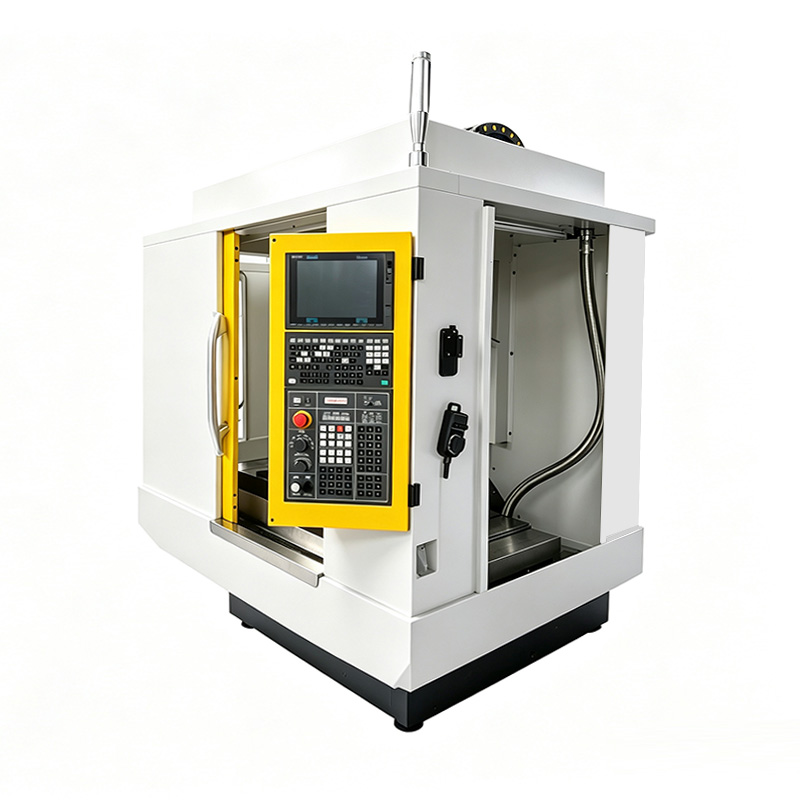
Searches for drilling machining express a real information need, but the keyword alone is not a machine specification. This guide answers the term in plain language, then shows what to verify before selecting or quoting a CNC process.
What does “drilling machining” mean?
CNC drilling uses programmed positioning and a rotating tool to create holes; a drill-tap center may add tapping and milling. Hole depth, material, chip evacuation, tool interface, coolant and fixture access must be specified together.
Related terms covered in this guide include: drilling machining, cnc deep hole drilling machine, cnc hole drilling machine. They describe a connected search intent, but suppliers may use them differently. Replace the phrase with a written scope covering axes, travels, spindle, tooling, workholding, guarding, coolant, control and acceptance.
Define the process before comparing machines
List hole sizes, depths, materials, threads, positional tolerances, sequence and workholding. Ask for a representative test cut with the same tool and inspection method.
- Part: material, stock, finished envelope, features and critical tolerances.
- Setup: datums, fixture, clamps, pallet or table and operator access.
- Cutting: tools, holders, spindle interface, coolant and chip evacuation.
- Production: batch size, changeover, inspection points and recovery after a stoppage.
- Site: foundation, utilities, lifting route, service clearance and guarding.
Comparison checklist
| Question | Evidence to request |
|---|---|
| Can the tool reach the part? | Configured machine and fixture drawing with the longest tool and clearances. |
| Can the process be held? | Spindle, axis, tooling and workholding assumptions tied to the representative cut. |
| Can quality be demonstrated? | Test piece, datums, measurement method and acceptance limits. |
| Can it be operated safely? | Guarding, interlocks, controls and maintenance access for the installation. |
Evidence, standards and safety
ISO 230-1 describes geometric accuracy tests under no-load or quasi-static conditions, while ISO 230-2 addresses positioning accuracy and repeatability of numerically controlled axes. ISO 230-12 addresses finished test pieces. These references help define a test conversation; they do not replace a project-specific acceptance plan.
OSHA machine-guarding guidance identifies point-of-operation, rotating-part and flying-chip hazards for machinery including milling machines. Confirm guards, interlocks, emergency stops and local requirements with the responsible installer.
Relevant CNC Tech product references
Use T745 heavy-duty CNC drill tap center and T7S CNC drill tap center as starting points, then request the latest configuration drawing and quotation for the representative part. For an unusual application, send the drawing and process details to CNC Tech for review.
Frequently asked questions
Is the biggest or fastest machine always best?
No. The useful choice is the simplest configuration that reaches the features, holds the process and meets inspection requirements.
What belongs in a quotation?
Model, travels, spindle and tooling, workholding assumptions, options, installation, training, documentation, exclusions, delivery terms and acceptance test.
How do I avoid comparing unlike offers?
Use one representative part and one written scope. Compare the same material, fixture, tools, coolant, program assumptions and measurement method.
Sources: ISO 230-1; ISO 230-2; ISO 230-12; and OSHA machine guarding.